CRM Selection for Remodeling Companies at $1M to $5M
The right CRM transfers sales management from the owner's memory to a process others can run.
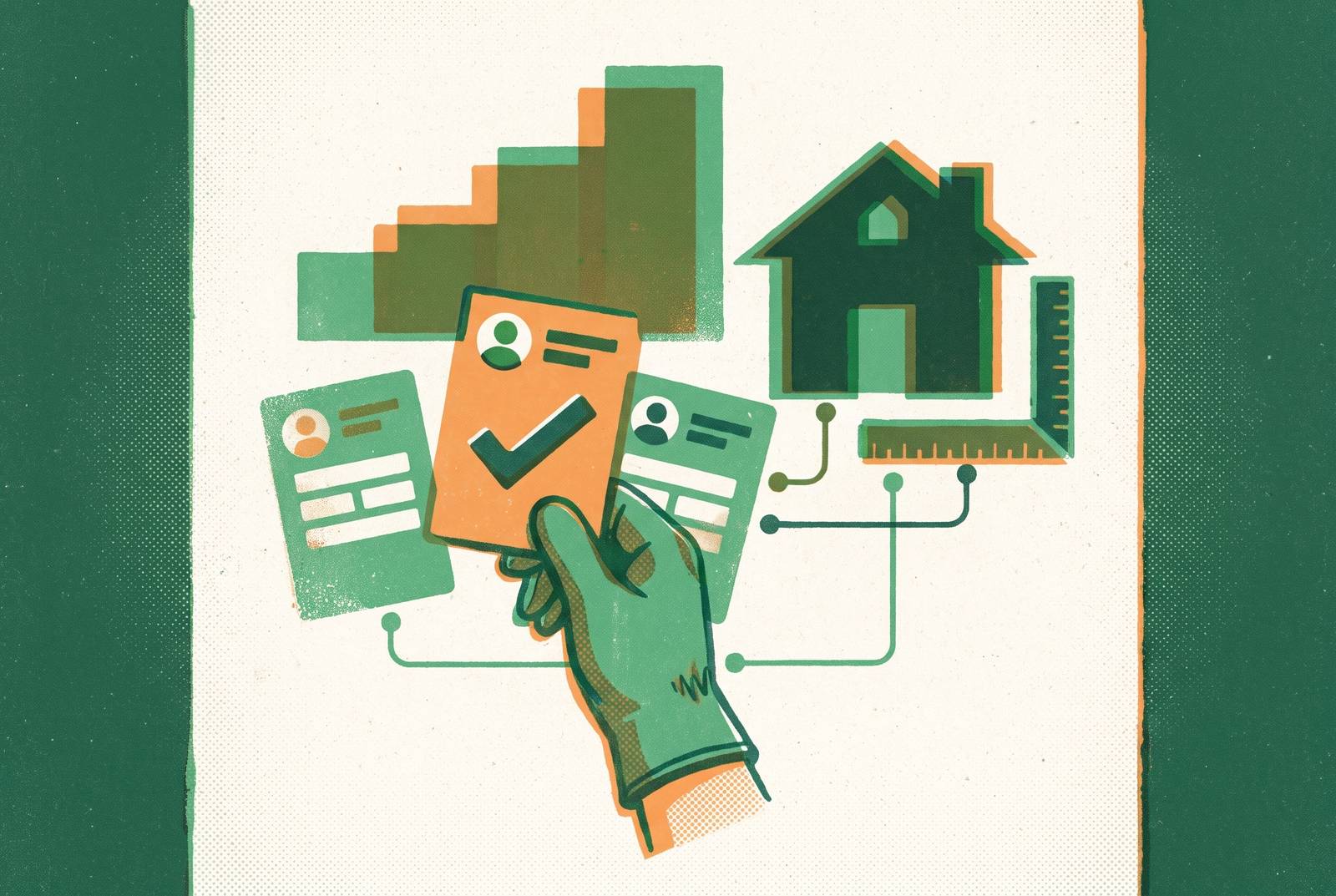
Selecting a CRM for a remodeling company in a higher revenue band is a decision about whether the business can operate beyond the owner’s memory. The right choice must fit how the company sells, bring back chances to sell that it has overlooked, and keep work moving without someone prompting it all the time.
Why this higher revenue band is a structural breaking point, not just a growth stage
Below this revenue band, an owner can often keep every lead, follow-up, and job detail in their head. That stops working as the company adds more crews, gets more leads, and takes on more complex projects. Decisions wait because too much information sits with one person. Leads slip between the appointment and the next conversation. Margin erodes even when the work itself is good, because the information needed to run that work does not reach the right people.
This is a capacity problem before it is a sales problem. Near the upper end of the range, adding leads does not fix an operation that already struggles to act on the ones it has. It gives the same owner more to do. At the same time, as revenue grows, even a small gain in how well the business runs is worth more in dollars. The case for a shared system becomes sharper precisely when the owner has less time to build one.
The change required is a transfer of responsibility from personal memory to a working process that other people can use. That distinction separates a company that can add staff from one that merely gives its owner more people to supervise. At this stage, the CRM decision is really a decision about what kind of business is being built.
What a remodeling sales cycle actually looks like, and why generic CRMs mismodel it
For an in-home, one-call-close remodeler, the consultation is the central sales event. It is not a twelve-touch business-to-business pipeline. A CRM built around that longer sequence can track plenty of activity while missing the appointment where the decision takes shape. Design-build work has a different rhythm, with a longer relationship before and during the project. The sales model has to fit the work.
Even when the consultation does the selling, the homeowner may take months to move ahead. Someone requesting a quote in January may not start the project until June. That pause does not automatically mean the opportunity is dead. The system must keep the relationship warm without requiring the owner to manage every record by hand.
At the same time, speed still counts. Two or three other contractors may be quoting the same kitchen in the same week, so a prompt proposal is a competitive tool. Financing also changes the conversation on a project in the mid-five figures. A monthly payment can convert some homeowners who would otherwise need more time to think. Another follow-up email cannot always solve a payment concern.
The unsold estimate sits at the intersection of these issues. The business has already put in the work to earn the inquiry, attend the consultation, and prepare the proposal. It has not earned the revenue yet. But leaving that estimate untouched wastes the work already put into the sale, often while the company pays to bring in another lead. For most remodelers, surfacing this unresolved pipeline offers more value than a better scheduling tool, because the next sale may already be waiting in an estimate nobody remembered to revisit.
The five criteria that actually matter when selecting a CRM at this stage
The first criterion is sales motion fit. Before a demo, the contractor should be able to ask whether the platform models the way the company actually wins work. That may mean an in-home one-call close, high-volume canvassing, or a long design-build relationship. These are not interchangeable ways of selling. A system built for canvassing and call-center volume can create friction for a firm doing a small number of large projects, while a client-communication tool can feel thin to a replacement remodeler managing a sales team.
The second criterion is speed to follow-up. In a demo, the question is whether first contact and structured follow-up happen automatically or wait for someone to trigger them. The distinction is easy to miss on a feature sheet that merely says the software supports email and text. Sending messages is not the same as initiating them. If every outreach still depends on the owner remembering, the bottleneck remains.
The third criterion is unsold-estimate visibility. The contractor should ask the vendor to show every recently presented estimate that is unsold but not formally lost, sorted by value. This needs to work in the live demo. A platform that cannot produce that view in real time has a gap in its model for remodeling, regardless of how polished its general sales dashboard looks.
The fourth criterion is field-to-office data flow without re-entry. The demo should show whether information from the in-home estimate can move into production scheduling and invoicing without someone typing it again. Re-entry creates both errors and accumulating administrative work. A system can seem to do everything each department needs yet still leave the office copying information from one department to another.
The fifth criterion is scalability without re-platforming. The contractor should ask whether the system can support the business expected in two to three years. A later migration is a hidden cost of an apparently affordable choice. Successful scaling means building the operation before hiring more people into it.
How the leading platforms map to those criteria for remodelers specifically
For an in-home one-call-close business, the useful comparison starts at the appointment and continues through proposal delivery and follow-up. The platform needs to support that concentrated sales event without losing the homeowner who takes longer to decide. Financing belongs in that evaluation because a payment option can change the outcome when another reminder will not. The live demo needs to follow the sale as it happens, including the estimate that is still open afterward.
For high-volume replacement remodeling in windows, siding, and baths, canvassing and call-center work change the emphasis. Sales-team follow-up and lead handling belong at the center of the comparison, rather than being treated as minor additions to project management. improveit 360’s 2026 guide presents automated texts and emails as a way to reach a lead before that homeowner chooses someone else. That addresses a relevant requirement for this sales motion. That alone does not show how well the platform meets every selection criterion, so the demo still needs to show estimate visibility and field-to-office handoffs.
For design-build firms, staying in touch while the work is underway matters more in the choice because they work with each client for so long. Buildertrend’s official FAQ describes a client portal where homeowners can see project updates, approve selections and change orders, review schedules, pay invoices, and communicate with the team. Those functions fit a relationship that continues well beyond the signed proposal. Its official CRM page also lists a CRM Hub, proposals, and email marketing, so treating it as having no pre-sale capability would be wrong. The contractor still needs to check how well that sales pipeline fits the firm’s work.
Buildertrend’s client portal is relevant to design-build work, but portal functions alone do not establish how well it handles unresolved estimates or automated lead response. The same caution applies in reverse. A platform’s strength in contacting new leads does not establish its suitability for a long project with ongoing selections and approvals.
For exterior remodelers and roofing-adjacent crews with heavy field work, the comparison turns on the field-to-office handoff. The contractor should ask for a demonstration that moves estimate data into scheduling and invoicing without re-entry, rather than assume a construction product handles that path cleanly. A familiar category name is not enough. Across all these sales motions, the same unsold-estimate test remains useful because it exposes whether the platform can surface money still in play.
Where AI automation fits into the CRM decision at this revenue level
AI-powered automation belongs in this decision as a present operating requirement. It can bring the biggest return by cutting the time between a lead coming in and the business responding. The owner may be on a job site. If the system waits until the owner gets back to the office, a faster competitor can win the lead, even when its record is in perfect order.
The same principle extends from first contact to the quote. A prospect who receives an estimate while the contractor is still on-site or within hours is more likely to approve than one left waiting for days. The CRM must trigger the relevant follow-up automatically. Timing is part of the sales process. Automating that timing is how the system begins to replace attention, instead of just storing the results of attention already spent.
Beyond selling, invoicing, review requests, and job status updates can run without someone in the office manually touching each one once the system is configured. That reduces the administrative burden that consumes owner time. Platforms that bring AI-driven lead response, quote follow-up, and post-job communication into one system also avoid the repeated handoffs of separate marketing, CRM, and invoicing tools. The benefit is less work waiting for a person to notice it.
For the contractor evaluating these claims, the question is whether the CRM runs the process or merely organizes what the owner already knows. An automated response, a quote follow-up, and a post-job message are concrete functions to evaluate. A broad promise of intelligence is not a substitute.
The implementation question most contractors skip and why it determines whether the CRM actually works
Even the right platform can sit half-configured while the owner continues to run the business from memory. The CRM has to be configured before the owner is expected to step back, with lead routing, automated follow-up, pipeline stages, and reporting ready for use. Otherwise, new hires enter a half-built operation and inherit the same dependence on the owner that the software was meant to remove.
The practical shift is from choosing capabilities to assigning responsibility. Before go-live, the company needs to name an owner of the CRM who keeps the data clean, adds lead sources, and pulls reports each week. It also needs clarity about which follow-up sequences run from day one and which still require a human trigger. Neither task can remain an assumption. A feature that nobody configures or maintains is not a working process.
The contractor should establish whether the unsold-estimate report runs automatically or waits for someone to remember it. The connection to existing estimating and invoicing tools needs the same scrutiny, because duplicated data entry can survive inside an otherwise new system. Leaving them unresolved preserves the manual work that justified the purchase.
The contractor should ask the vendor how long a typical implementation takes and what will actually be live on day one. A system that takes months to configure invites the business to work around it. The final test is whether the owner can take a week off without the pipeline stalling. If that is still impossible six months after go-live, the implementation failed, regardless of which platform was selected.