Cash Flow Management for Project-Based Remodeling Businesses
How structured payment schedules let remodelers collect cash before costs come due.
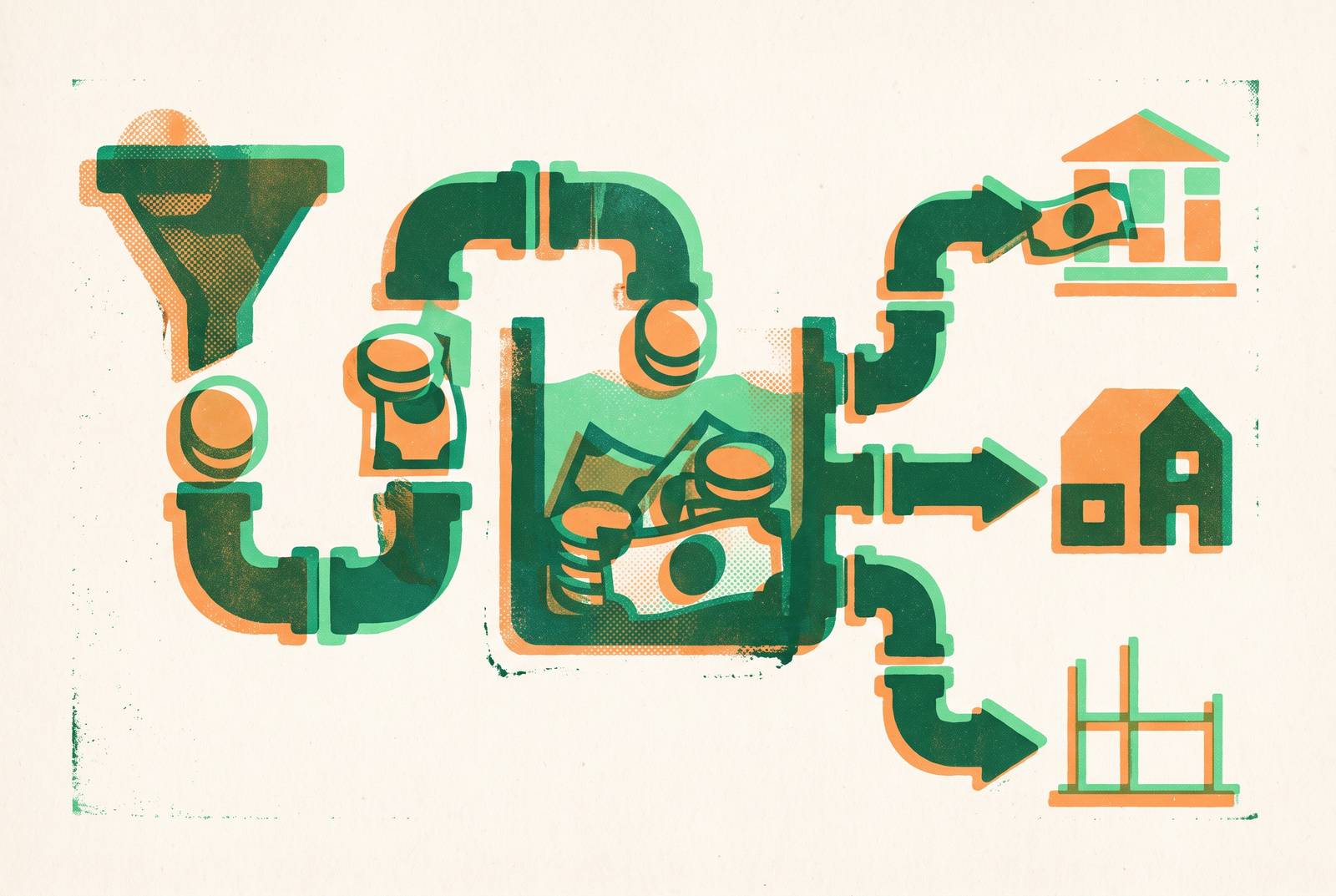
A kitchen remodeler can hold $80,000 in receivables and still come up short on payroll by Wednesday. That paradox sits at the center of remodeling finance: it is what happens when the contract itself puts costs on Day 1 and payment weeks later, by design.
Why Remodeling Cash Flow Problems Are Built Into the Contract
A kitchen remodel running four to eight weeks from demo to punch list needs cabinets, countertops, fixtures, and appliances paid to suppliers upfront, long before the homeowner's milestone payments catch up. Bay Street Lending's 2026 analysis found that a contractor running three active projects at once can be short on cash mid-week, even when $80,000 in receivables is expected that same month. The work is getting done. The money just hasn't arrived yet, because the contract never asked it to arrive on the same day the costs hit.
A few pressures widen that gap further. An inspection or a client approval has to happen first, and the contractor controls neither one. Retainage sits withheld until the project wraps. Change orders add cost before they add an invoice. And standard payment terms, Net 30, Net 60, sometimes longer, stretch the distance between finishing work and getting paid for it. None of this is misconduct on anyone's part. It's simply how the paperwork is built.
Even a profitable job can strain the business running it. A contractor can have a full schedule, strong margins on paper, and still run out of cash. That is the quiet failure mode of remodeling: going under with a full order book, not an empty one.
Billing Method: The Primary Controllable Lever
A contractor can't control most of what creates the cash flow gap. Client payment timelines, inspection schedules, retainage rules, subcontractor calendars: all fixed by someone else, or by convention. One thing is not fixed. How the contractor bills is a decision made before the first nail goes in, and it belongs entirely to the business.
Three billing methods show up across remodeling work, each handling that decision its own way.
With random billing, the contractor invoices when they remember, or when the bank account runs low. It's reactive by nature. Because it's disconnected from actual project costs, it puts the contractor in the position of chasing money only after the need has already become urgent.
Milestone billing invoices at construction phase triggers, framing complete, rough mechanicals done, and so on. It's common practice, but it's often unreliable, because the dollar amount gets set arbitrarily for each milestone instead of being built from the real costs due in that phase, including deposits owed on the next phase.
Scheduled billing invoices on a recurring schedule set by calendar, not by construction phase, and the payment terms get spelled out to the client before work starts. Of the three, it's the one most likely to keep cash flowing steadily into the business.
None of this means milestone billing is always the wrong call. Some projects and some clients fit it well. But scheduled billing builds in a predictability the other two don't.
How scheduled billing works and what makes it effective at closing the timing gap
Scheduled billing doesn't close the timing gap just because it bills more often. It closes the gap by making the timing predictable. Both the contractor and the client know when an invoice is coming, so payment becomes a routine expectation.
To build a scheduled billing plan, you break the total contract value into several smaller invoices spaced at regular intervals. Smaller, frequent invoices avoid sticker shock for the client, and they keep cash moving through the middle of the project, when material and labor costs run heaviest. The schedule should go to the client in writing before work starts, so funds are ready when each invoice lands. Billing intervals should match the project's actual cost rhythm: weekly billing fits a project with weekly labor and material outflows, while bi-weekly or twice-monthly schedules suit longer jobs.
A more advanced version ties each payment to a specific trade obligation. One payment comes due when framing materials are ordered. Another lands when framing passes inspection. A third follows once rough mechanicals wrap. Each client payment is timed to arrive before or alongside the matching subcontractor invoice, so the contractor never has to front costs out of their own reserve.
That same discipline extends to how a contractor works with trades and vendors. Instead of waiting for a trade partner to send an invoice, the contractor can request a deposit invoice the moment that partner is hired. If the contractor gets that invoice early, they can bill the client and plan to have cash on hand before the trade payment comes due. The same logic applies to material vendors: issuing a purchase order and requesting the vendor's deposit invoice at the same time lets the contractor build that cost into the billing schedule before the order even ships.
Change orders need the same speed. If the contractor issues the paperwork fast and gets it paid before the additional work starts, they never end up holding costs for scope changes nobody has billed for yet.
Deposit Size and Final Payment Structure
Scheduled billing fixes timing. It doesn't fix sizing, and sizing is where the next risk lives.
Residential home improvement projects typically collect 10 to 20 percent at contract signing. That range often falls short of what the job actually costs in its first days. Think about that kitchen remodel again: cabinets, countertops, fixtures, and appliances all need paying for upfront, well before the first milestone check clears. A deposit sized to a standard percentage rather than to those real early-phase costs, materials deposits, mobilization expenses, the first week of labor, leaves the contractor fronting the difference. A deposit built around what you actually need to spend before the first scheduled invoice comes due protects the business far better than a round number picked out of habit.
The other end of the contract carries its own risk. If closeout represents a large share of total contract value, project-end friction, punch list disagreements, a client traveling, a delayed final walkthrough, can hold a sizable chunk of earned revenue for weeks after the crew has packed up. Shrinking that final payment down to a smaller share of the contract means most of the money has already changed hands by the time closeout friction occurs. A slow client at the end becomes an annoyance instead of a threat.
Making that work means shifting more value into the middle of the payment schedule, which is what scheduled billing already sets up. The negotiation that decides this, often called the schedule of values, is where contractors either protect their cash position or leave it exposed. Front-loading mobilization costs into that schedule is a recognized way to keep cash flow steady from the start.
How Retainage Compounds the Timing Gap
Retainage is earned revenue the client is allowed to hold back. For contractors who treat its release as automatic, it quietly drains working capital, and that drain grows larger as project volume grows.
Few contractors try the negotiation that would help most: retainage rates are negotiable before a contract gets signed. Asking for a lower percentage, or asking for retainage to drop to zero once a defined completion threshold is hit, is common practice, and clients grant it more often than most contractors expect. Negotiating these terms before signing belongs in the same category as negotiating deposit size: a lever contractors control completely, available before any work starts.
Retainage doesn't release itself once the contractual trigger is met. The billing for it needs to go out immediately, with closeout documentation attached. A completed project with retainage still sitting uninvoiced is working capital the business is losing for no reason other than a missed step. Retainage release deserves a spot on the calendar with the same priority as any other scheduled invoice.
2026 adds another wrinkle. Tariffs on structural steel, copper, and select electrical components keep compressing margins, so retainage withheld on an already-thin job hurts more than it used to. If you build an explicit allowance and escalation clause into the contract, the number bid at signing still matches what materials actually cost by the time they're purchased.
What a 13-Week Cash Forecast Does
A contract can be built well, with scheduled billing, a properly sized deposit, a protected final payment, and negotiated retainage terms, and the business can still run into a cash crisis if nobody is watching what's arriving and what's due over the next three months. That's what a rolling cash forecast is for: it tells a contractor whether all those billing decisions are actually performing the way they were designed to.
A rolling 13-week cash flow forecast has become a standard practice for contractors managing cash flow in 2026. Thirteen weeks is long enough that you can spot a payroll shortfall before it arrives, while staying short enough that the numbers stay accurate. Unlike an annual budget or a single project's cost tracker, the forecast has to be built from the actual project schedule rather than historical averages, because what's billed, when it's due, and when it's likely to get paid are all specific to the job in front of the contractor right now.
Watched closely, that forecast reveals trouble early. When underbillings, work completed but not yet invoiced, climb, it's a sign the billing schedule is falling behind the pace of costs. If days sales outstanding creeps past a set threshold, collections are lagging the payment schedule that was supposed to prevent exactly that. Leaning on a credit line to cover payroll more than once points to scheduled billing not landing when it should. A growing retainage balance with no release plan attached means earned revenue is piling up uncollected. And project managers quietly delaying large material orders because cash feels tight is often the first visible sign that something upstream has gone wrong.
That visibility matters because of what happens when it's missing. Contractors who can't see the gap clearly often end up slowing down growth, because the cash to take on more of it isn't accessible even when the work is there. A 13-week forecast is what turns that from something a contractor reacts to after the fact into something they see coming and plan around in advance. It closes the loop on every billing decision made back at contract signing.
Operations Software and AI-Assisted Tools for Billing and Forecasting
Scheduled billing, payment timing tied to trade costs, active retainage tracking, a rolling 13-week forecast: all of this takes consistent, ongoing execution. Most small remodeling businesses don't have a finance department to run it by hand while also managing live projects.
That's the gap software now fills. Tools that automate invoicing, track payment schedules, flag underbillings, and surface overdue retainage turn these disciplines into something the business runs on its own, instead of something an owner has to remember to do between job sites. AI-assisted tools now handle quoting, invoicing, and payment communication in ways once available only to contractors large enough to employ a dedicated finance person. In 2026, you need to review accounts receivable every week and keep change-order paperwork tight, and systems that automate both cut down the owner's time cost of keeping up with them.
The real gain appears when these pieces live in one place. A billing schedule that sits alongside the project timeline, the trade payment calendar, and the accounts receivable aging report gives the contractor one clear view of where cash actually stands, instead of a weekly reconciliation chore across five different tools. Automated reminders sent before a payment is due, rather than chasing it after, shrink the lag between sending an invoice and collecting on it, without the owner having to make a single follow-up call. For a business built around tight timing and thin margins, that kind of visibility is what turns a sound billing structure into cash that actually shows up when it's supposed to.